Guide · Skincare
Day cream and night cream: do you need both?
Two jars are an option, not a rule. What counts is texture, sun protection and how a cream feels on your skin.
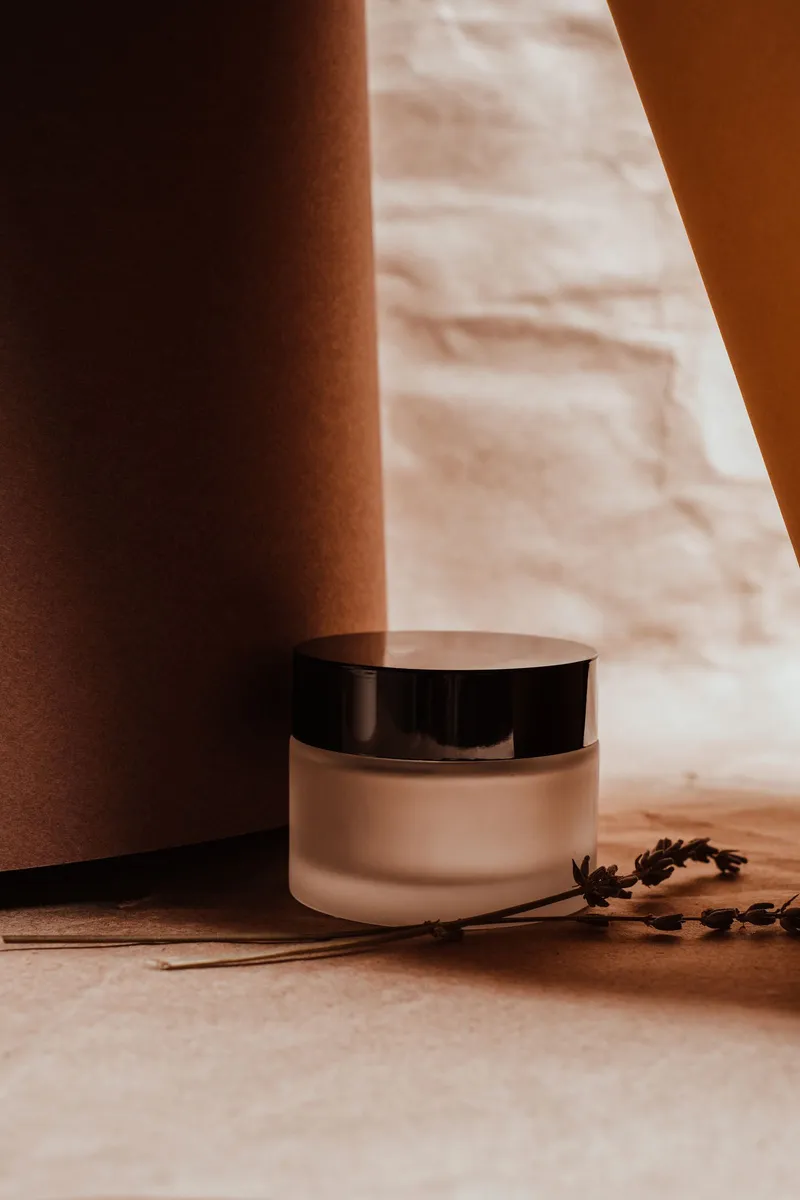
In short: you do not strictly need two creams. One face cream that suits your skin and feels good can do for morning and evening. Two products make sense mainly if you want a day cream with a sun protection factor (SPF) in the morning and something richer in the evening.
By Luljeta Dine, Beauty Director at AQAFACIAL™, author and expert in cosmetics, wellness and well-being. This page is the English version of the German original, Tages- und Nachtcreme: Brauchst du beides?.
What is the difference between day cream and night cream?
Two things most often set day and night creams apart: sun protection and texture.
Sun protection. Some day creams contain UV filters and show an SPF on the pack. Stiftung Warentest, the German consumer testing foundation, examined eleven day creams with an SPF of 15 to 30 (test 3/2021). Five of them were rated "poor": not all products delivered what they promised, and expensive was not automatically better. Whether your cream has an SPF is printed on the pack.
Texture. Creams differ in how much fat they contain. Stiftung Warentest describes water-in-oil (W/O) creams as comparatively rich emulsions made of tiny water droplets enclosed in oil. They absorb slowly, leave a slight shine and are used above all as a night cream. For very dry or mature skin and in winter they also serve as a day cream and a shield against the weather. Oil-in-water (O/W) creams are lighter: they usually absorb faster, look more matte and are described as the right daytime care for normal and oily skin. That explanation dates from 2004. It describes the principle, not individual products.
Claims on the pack, whether for day or night, are advertising statements until a source shows otherwise.
Do you need both?
Not necessarily. One cream is often enough if it:
- feels comfortable on your skin, neither tight nor too heavy,
- suits the season, since richer creams are an option in winter,
- comes with sun protection that you have thought through, either in the cream or as a separate step.
Two creams can make sense if you prefer a light cream with an SPF in the morning and a richer texture in the evening because your skin feels better that way. That is a matter of taste and skin feel. There is no rule.
When does an SPF in your day cream help?
From a UV index of 3, the Federal Office for Radiation Protection (BfS) names protective measures: shade around midday, suitable clothing with a hat and sunglasses and, on uncovered skin, sunscreen with an adequate sun protection factor. In the BfS list, sunscreen comes third, after shade and clothing. A day cream with an SPF is one of the measures the BfS names. How to read the scale is explained in Understanding the UV index: when to protect.

Do anti-wrinkle creams deliver what they promise?
Many creams advertise firming or smoothing, in the morning or in the evening. In 2015 Stiftung Warentest tested nine anti-wrinkle creams on 270 women over four weeks; none visibly softened wrinkles, and all nine were rated "poor". The test covers these nine products, but it shows that a promise on the pack is not evidence.
How do you choose?
Start with your skin, not with the label "day" or "night". Ask yourself:
- Does my skin feel tight, comfortable or shiny after the cream has settled in?
- Is it winter, with dry heating air, or a warm season?
- Do I want sun protection in this product, or do I use it separately?
- Does the ingredient list suit me? If you have reacted to products before, read it with care.
A short note on safety: the Verbraucherzentrale, a German consumer advice organisation, lists precautionary statements among the information a cosmetic product must carry, for example "Do not use on irritated skin". Take such a line seriously.
Tip from Luljeta Dine
Choose a cream you like to use. A cream you enjoy is one you use regularly.
Where the cream fits in your routine
In a simple routine the cream follows cleansing; see Skincare routine in three steps. If you want to know more about the person behind these guides, see Luljeta Dine.
When to see a doctor
Skin diseases belong with a doctor, not in a jar of cream. See a dermatologist if you get a rash, severe itching, pain or swelling after applying a product, or if eczema or redness lasts. The Verbraucherzentrale advises seeing a doctor if a cosmetic causes side effects such as a rash, and keeping the suspected product, ideally taking it along to the appointment. The German Dermatological Society offers a page on finding a dermatologist.
Questions and answers
Can I use a night cream during the day? That depends on the texture. A rich cream absorbs slowly and shines slightly. For normal and oily skin, Stiftung Warentest names lighter O/W creams as daytime care. For very dry skin or in winter it names rich W/O creams as a daytime option too. Keep in mind that you get no sun protection unless the pack shows an SPF.
Can I use a day cream with an SPF in the evening? In the evening there is no sun, so you do not need the sun protection. Whether the texture feels right at that time is up to you.
Does a night cream have to cost more? No. In the 2021 test of day creams with UV protection, the most expensive cost up to 100 euros per 100 millilitres, while the two best cost 3.90 and 8 euros.
Does an anti-wrinkle cream make skin look younger? There is no proof of that for these products. In the 2015 test, none of the nine anti-wrinkle creams softened wrinkles enough to see with the naked eye.
Is a cream with an SPF enough on a sunny holiday? The BfS advises seeking shade at midday, covering up with clothing, a hat and sunglasses, and using sunscreen on uncovered skin. A cream is one part of that.
Sources
- Stiftung Warentest, Tagescremes mit UV-Schutz im Test: Pflege und Sonnenschutz für wenig Geld (test 3/2021, online 22.03.2021, in German), https://www.test.de/Tagescremes-mit-UV-Schutz-im-Test-4684492-0/, retrieved on 11.11.2026
- Stiftung Warentest, test-Leser fragen: Was ist eine W/O-Creme? (22.01.2004, in German), https://www.test.de/test-Leser-fragen-Was-ist-eine-WO-Creme-1152163-0/, retrieved on 11.11.2026
- Bundesamt für Strahlenschutz (BfS), Was ist der UV-Index? (in German), https://www.bfs.de/DE/themen/opt/uv/uv-index/einfuehrung/einfuehrung_node.html, retrieved on 11.11.2026
- Stiftung Warentest, Antifaltencremes: Falten wegcremen? Klappt nicht! (21.12.2015, in German), https://www.test.de/Antifaltencremes-fuer-die-Nacht-Kaum-Entfaltung-im-Schlaf-1504642-2504642/, retrieved on 11.11.2026
- Verbraucherzentrale, Kosmetik: Inhaltsstoffe, Kennzeichnung und unerwünschte Wirkungen (in German), https://www.verbraucherzentrale.de/wissen/umwelt-haushalt/produkte/kosmetik-inhaltsstoffe-kennzeichnung-und-unerwuenschte-wirkungen-26338, retrieved on 11.11.2026
- Deutsche Dermatologische Gesellschaft, Facharztsuche Dermatologie (in German), https://derma.de/patienten/facharztsuche-dermatologie, retrieved on 11.11.2026
Updated 11.11.2026
Keep reading
Related

Guide · Skincare basics
Eight common skincare mistakes
Most skincare problems come from too much care or the wrong care, not from too little. Eight typical mistakes, the reason behind each and one simple fix.

Guide · Skincare
Evening cleansing: gel, oil or balm
Gel, oil and balm are the three common forms of evening cleanser. What matters more than the form is a mild cleanser, lukewarm water and a gentle hand.
Guide · Skincare
Eye care: when does it make sense?
A separate eye cream is not a must. It can make sense when the skin around your eyes feels dry, or when your face cream does not suit your eyelids.